


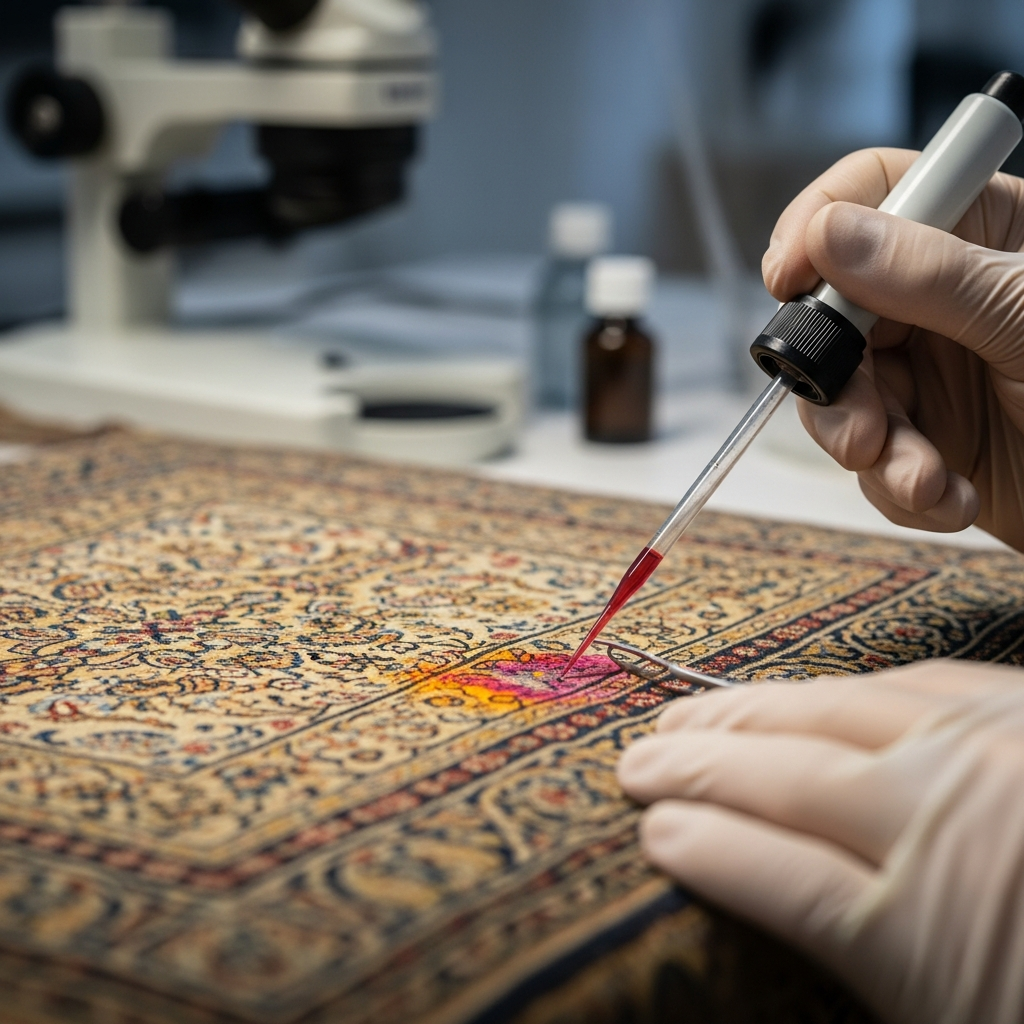
A catastrophic color bleed on a high-value textile is more than a stain; it’s a complex chemical reaction demanding a forensic-level response. When dyes from one area migrate into another, standard carpet cleaning methods are not only ineffective but often exacerbate the damage. This phenomenon, prevalent in everything from heirloom Oriental rugs to custom-dyed carpets, requires a sophisticated understanding of fiber science and dye chemistry. Successful dye bleed correction is not about cleaning—it’s about controlled chemical reversal at the molecular level, a specialized discipline where precision is paramount.
The root cause of most dye bleeding incidents is a broken ionic bond between the dye molecule and the fiber, typically wool or nylon. This bond is notoriously sensitive to pH. When exposed to an alkaline cleaning solution (often with a pH above 8.5), the dye’s bond to the amino acid sites in a wool fiber can be destabilized, allowing it to become water-soluble and migrate. Research indicates that fugitive acid dyes, common in older or improperly set textiles, are the primary culprits. Correcting this involves a process far more delicate than aggressive dye stripping. Technicians must first neutralize the textile and stabilize the original, non-fugitive dyes using dye-setting agents in a carefully controlled acidic environment, typically between a pH of 4.0 and 5.5, before attempting any color removal.
Modern color repair technology primarily utilizes two opposing chemical pathways: oxidation and reduction. While oxidizing agents can strip color, they are often too aggressive, permanently damaging the fiber’s chromophores (the color component of the dye molecule). The superior, more nuanced approach involves chemical reduction. Specialized reducing agents, such as sodium hydrosulfite or thiourea dioxide, work by removing oxygen from the migrated dye molecules. This process can reverse the dye’s chemical state, effectively rendering it invisible without harming the underlying, properly set dyes. When professionally applied, this technique has a success rate exceeding 90% for removing fugitive color bleeding, restoring the textile’s original design integrity with minimal risk to the fiber itself.
Ultimately, dye bleed correction is a technical specialty that exists at the intersection of chemistry and artistry. It is a calculated risk that should never be attempted by untrained individuals or relegated to standard cleaning protocols. The process requires meticulous fiber identification, spot testing, and precise chemical formulation. For owners of luxury and investment-grade carpets, the key takeaway is clear: in the event of a color bleed, immediate consultation with a certified textile color repair specialist is the only viable course of action to protect and restore the value and beauty of your asset.
No responses yet