


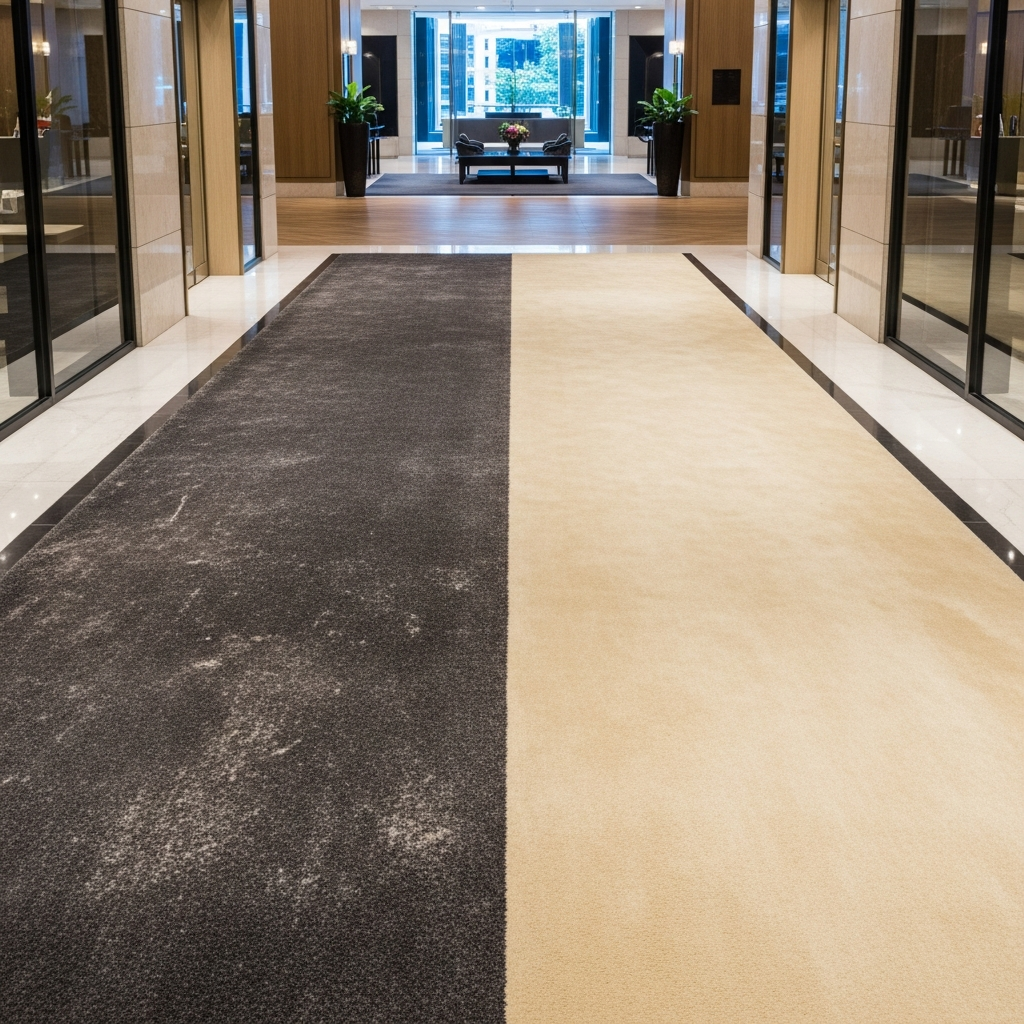
High-traffic lanes are the arteries of a commercial space, but they bear the brunt of daily wear, accumulating soil that can permanently damage carpet fibers. Standard vacuuming is merely surface-level; true maintenance requires a scientific approach to mitigate the primary cause of premature carpet replacement: abrasive soil. For facility managers and luxury property owners, understanding the physics of soil ingress and the technology designed to combat it is not just about aesthetics—it’s about protecting a significant capital investment and maintaining brand integrity from the ground up.
The first line of defense is strategic and surprisingly effective: walk-off mat systems. Research from the carpet and rug industry consistently shows that up to 85% of all soil and moisture brought into a building is tracked in on the soles of shoes. An effectively designed walk-off system, with at least 15 to 20 feet of matting, can capture over 90% of this tracked-in dirt before it ever reaches the primary carpeting. This dramatically reduces the abrasive wear in traffic lanes, as the sharp, crystalline silica particles that act like sandpaper on carpet fibers are trapped at the entrance. This preventative measure extends the interval between deep cleanings and preserves the carpet’s original texture and color fidelity far longer than reactive cleaning alone.
Once soil inevitably bypasses entry mats, it becomes embedded deep within the carpet pile. This is where mechanical pile-lifting becomes critical. A specialized pile-lifter uses a powerful cylindrical brush to agitate and break apart compacted soil from the base of the fibers, pulling it to the surface for extraction. This process is far more than aggressive vacuuming; it physically separates bonded soils and restores the matted, crushed pile that defines a traffic lane. Studies on appearance retention show that regular pile-lifting can remove up to 60% more dry particulate soil than high-performance vacuums alone. This pre-treatment step significantly enhances the efficacy of subsequent hot water extraction, allowing detergents to penetrate more evenly and resulting in a uniformly clean appearance.
For interim maintenance, methods like bonnet-cleaning are often employed to address surface-level appearance between deep extractions. While effective for quick visual improvement, it’s crucial to understand its limitations. Bonnet-cleaning primarily addresses the top third of the carpet fiber, using an absorbent pad to wick away soil suspended in a chemical solution. However, this method can push heavier soils deeper into the pile and potentially leave behind detergent residue, which can attract new soil more quickly. Therefore, it should be viewed as a component within a larger, integrated program that includes robust walk-off mat systems and periodic deep extraction preceded by mechanical pile-lifting. A balanced, scientifically-informed strategy is the definitive solution to conquering commercial traffic lane degradation.
No responses yet