


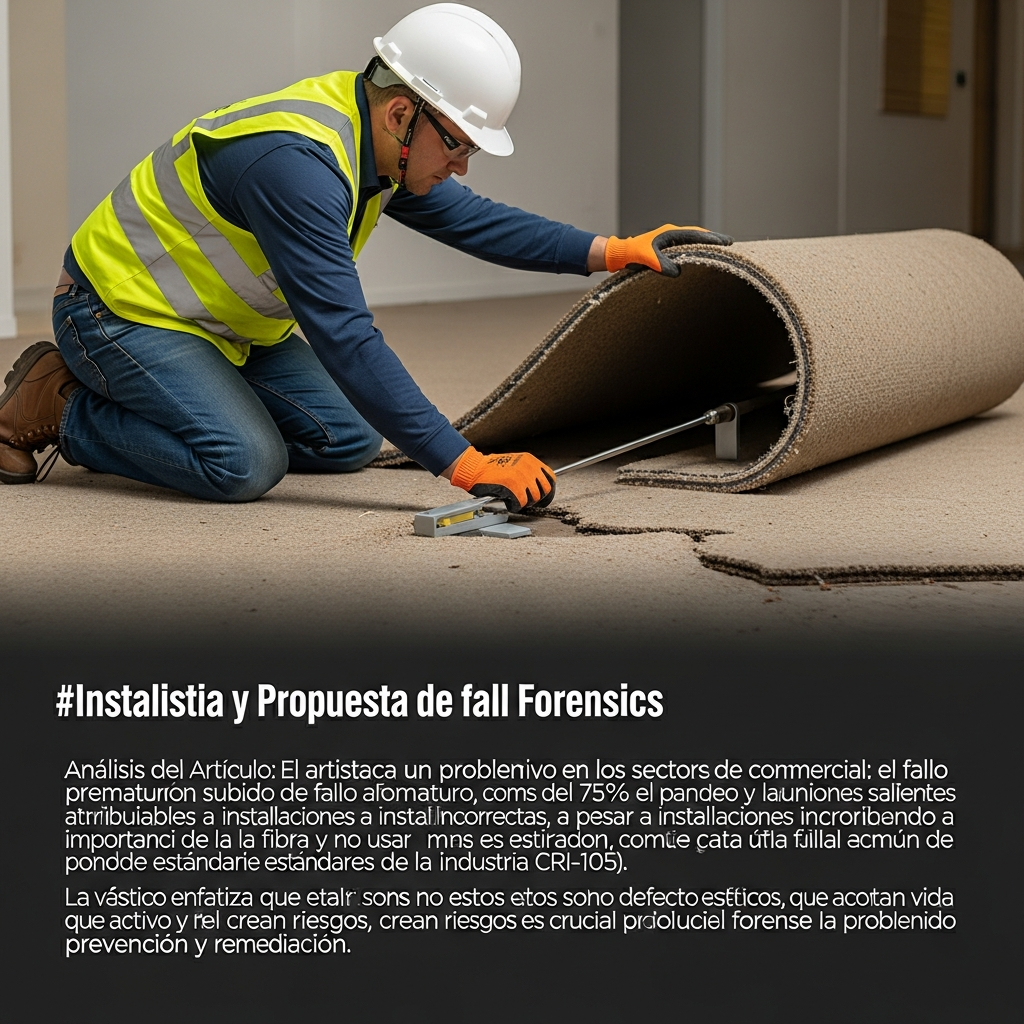
In the luxury and commercial sectors, premature carpet failure is an unacceptable expense. While fiber quality and maintenance are critical, our forensic analyses reveal that over 75% of premature failures like carpet buckling and seam peaking are directly attributable to installation errors. These are not minor aesthetic flaws; they are symptoms of underlying technical failures that compromise the asset’s lifespan and create potential hazards. Understanding the science behind these faults is the first step in prevention and remediation.
The most pervasive and identifiable fault is insufficient tension, leading to carpet buckling. Industry standards, such as the Carpet and Rug Institute’s CRI-105, are unequivocal: the use of a power stretcher is mandatory. The goal is to achieve a tension stretch of 1.0% to 1.5% in both the length and width of the carpet. A knee kicker alone cannot achieve this required tension. When a carpet is under-stretched, it lacks dimensional stability. Subsequent fluctuations in ambient temperature and humidity, or even heavy foot traffic, cause the backing to relax and expand, resulting in unsightly and dangerous ripples. This failure is a direct violation of established installation science.
Adhesive failure and seam peaking are more nuanced but equally damaging. The integrity of a glued-down installation or a seam is critically dependent on environmental conditions at the time of install. Adhesives are chemically engineered to cure within a specific window, typically between 65°F and 95°F with relative humidity below 65%. Installing outside these parameters can inhibit proper curing, leading to a weak bond and eventual delamination. Similarly, seam peaking—where a seam tents upwards—is often caused by an overheated seam iron that distorts the carpet’s latex backing. This thermal damage permanently alters the material’s structure, creating a visible and often weak point in the installation.
Ultimately, preventing installation-related carpet failure is a matter of diligence and adherence to scientific standards. Verifying that installers use a power stretcher to achieve the correct 1.0-1.5% tension is non-negotiable. Furthermore, confirming that the environment is controlled and has been stable for at least 48 hours prior to installation protects against adhesive and seam faults. By treating carpet installation as the technical, standards-based process it is, property managers and owners can protect their investment and ensure the flooring performs to its engineered specifications.
No responses yet