

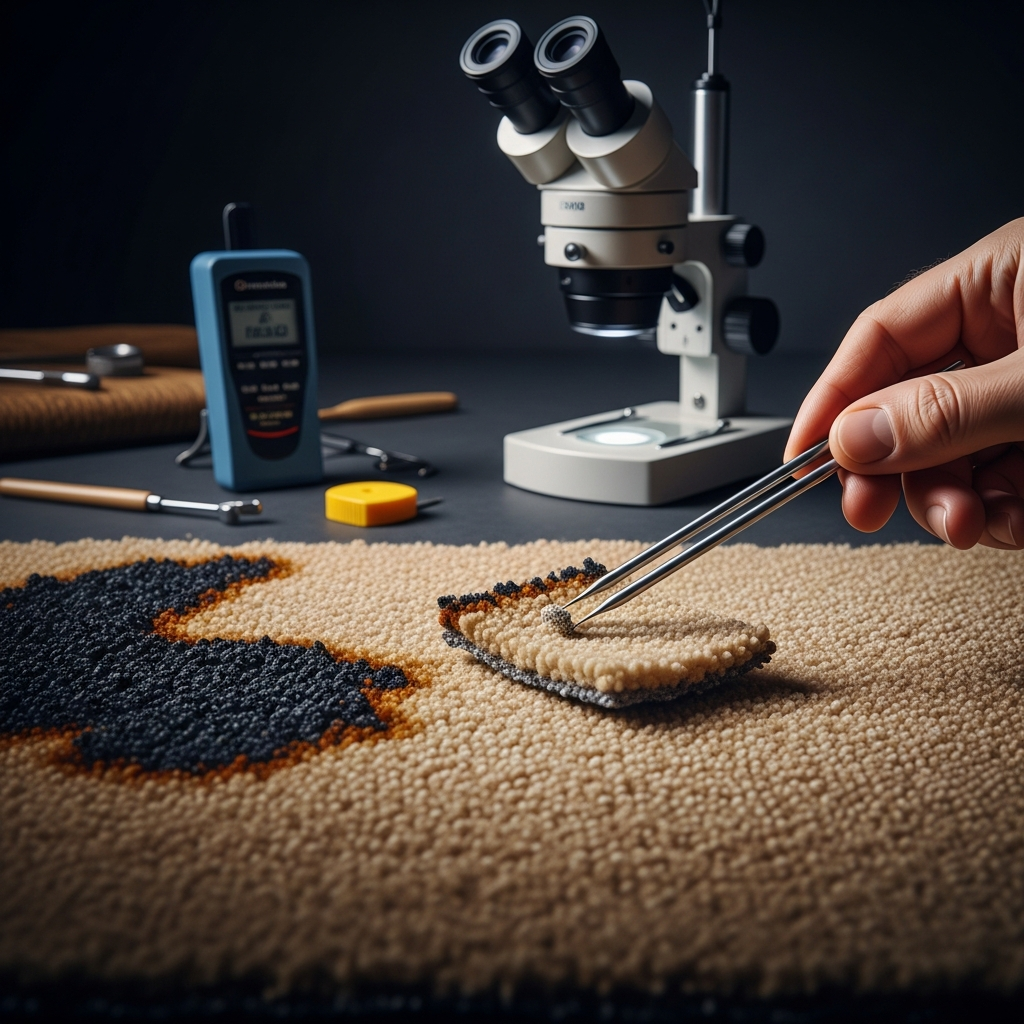
When a fire strikes, the visible char on a carpet is only the beginning of a complex insurance claim. Scoping these jobs accurately requires moving beyond surface-level assessments into the microscopic realm of chemical reactions and fiber science. For luxury and corporate clients, an imprecise scope doesn’t just delay restoration; it erodes trust and profitability. Underestimating the persistent nature of soot or the hidden structural damage from suppression efforts can lead to costly post-job complaints and denied claim supplements. Mastering the science behind the damage is the only way to build a precise, justifiable, and profitable scope of work that stands up to carrier scrutiny.
The first critical insight is that not all soot is created equal. The type of material that burned dictates the soot’s chemical composition, and therefore, the entire restoration protocol. Natural fires (wood, paper) produce a dry, powdery carbon soot that is relatively easy to remove with detailed HEPA vacuuming. However, synthetic fires, involving plastics, polymers, or oil-based materials, create a thick, oily black residue that smears under agitation. This type of soot requires specialized degreasing agents and careful technique, as its acidic nature can permanently discolor fibers within 24-48 hours. The most deceptive is protein residue from kitchen fires, which leaves a nearly invisible, greasy film with a powerful, rancid odor. Standard cleaning is useless; only enzymatic treatments can break down these biological compounds. Scoping a job without identifying the soot type—a distinction central to the IICRC S700 standard—is a recipe for failure, as a protocol for natural soot will do nothing for a protein-based odor problem.
The second pillar of an accurate scope is a rigorous analysis of the restore-versus-replace threshold, which hinges on fiber integrity and water damage. Firefighting efforts often introduce massive quantities of water, which IICRC standards classify as Category 3 contamination. This moisture attacks the latex adhesive binding the carpet’s primary and secondary backings, causing irreversible delamination. Even if the surface appears salvageable, a delaminated carpet has lost its structural integrity and must be replaced. Furthermore, the carpet’s fiber type dictates its resilience to heat and aggressive cleaning. Nylon, with its superior elasticity and higher melting point, can often withstand intensive restoration. In contrast, Olefin (polypropylene) has a low melting point (around 300°F) and is easily damaged by the friction from cleaning. Attempting to restore a heat-damaged Olefin carpet often costs more in labor than its replacement value, a critical data point for job-costing. When restoration, deodorization, and pad replacement costs exceed 70% of the carpet’s replacement value, full replacement is the only logical and defensible scope.
Ultimately, a scientifically sound scope transforms a potentially contentious claim into a smooth, profitable project. Technicians must document the soot type, perform pull-tests for delamination, and identify the carpet fiber before writing a single line item in Xactimate. This detailed assessment allows for precise job-costing, justifying line items for specialized processes like thermal fogging for odor, enzymatic treatments for protein soot, and full pad replacement. By grounding your scope in verifiable material science, you provide insurance adjusters with the clear, data-driven rationale they need to approve claims fully and promptly, cementing your firm’s reputation for expertise and operational excellence.
No responses yet