


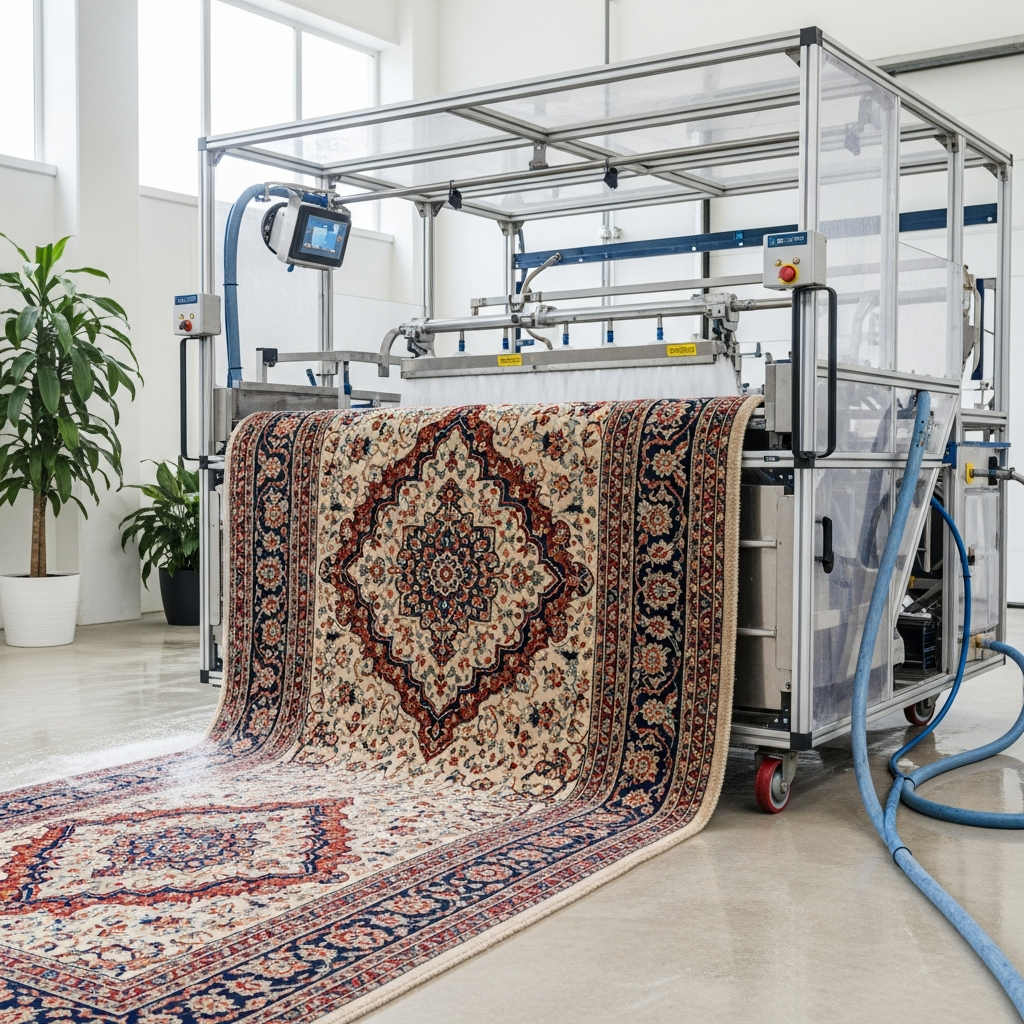
Beyond the reach of household vacuums and surface-level steam cleaning lies a world of advanced textile science, where modern rug washing plants operate with scientific precision. For collectors and purveyors of fine textiles, understanding these operations is no mere curiosity; it is crucial to preserving the value, integrity, and beauty of their investments. This is not simply cleaning; it is a meticulously engineered process of decontamination and restoration, grounded in measurable results that protect delicate fibers from the inside out.
The most critical and often overlooked stage is mechanical dry soil removal. Research shows that up to 80% of the soil in a handmade rug is dry, abrasive particulate matter like sand and grit. These microscopic blades grind against fibers with every footstep, causing irreversible wear. Modern dusting machines and compressed air systems are engineered to dislodge this embedded soil with controlled vibration and harmonic frequencies. An automated duster can remove nearly two pounds of deeply impacted grit from a seemingly clean 6×9 rug. This single step is paramount, as removing this dry soil load first can reduce the required detergents and water consumption during the wash phase by as much as 40%, preventing the creation of abrasive mud that damages fibers during wet cleaning.
Following a full immersion wash, which flushes contaminants from the rug’s foundational yarns, the water extraction phase showcases one of the industry’s most significant technological advancements: the rug centrifuge. Where traditional drying methods can take 24 to 72 hours and risk dye migration and mildew growth, a rug centrifuge changes the game. Spinning at over 1,400 RPM, it uses immense G-force to expel up to 95% of the moisture from a rug in under five minutes. This rapid extraction is critical for preventing cellulosic browning and securing dye stability, particularly in vibrant vegetable-dyed wools. The final drying occurs in a climate-controlled environment, where humidity is precisely maintained between 40-50% to ensure fibers dry evenly without becoming brittle or distorted.
Ultimately, the protocols of a modern rug washing plant are a testament to the synthesis of technology and textile science. From high-efficiency dusting machines that protect the pile from abrasion to rug-centrifuge technology that safeguards against moisture damage, every step is a calculated measure. For those entrusted with the care of fine rugs, choosing a facility equipped with this advanced operational technology is the only way to ensure a truly restorative cleaning that enhances both the aesthetic appeal and the structural longevity of the textile.
No responses yet