


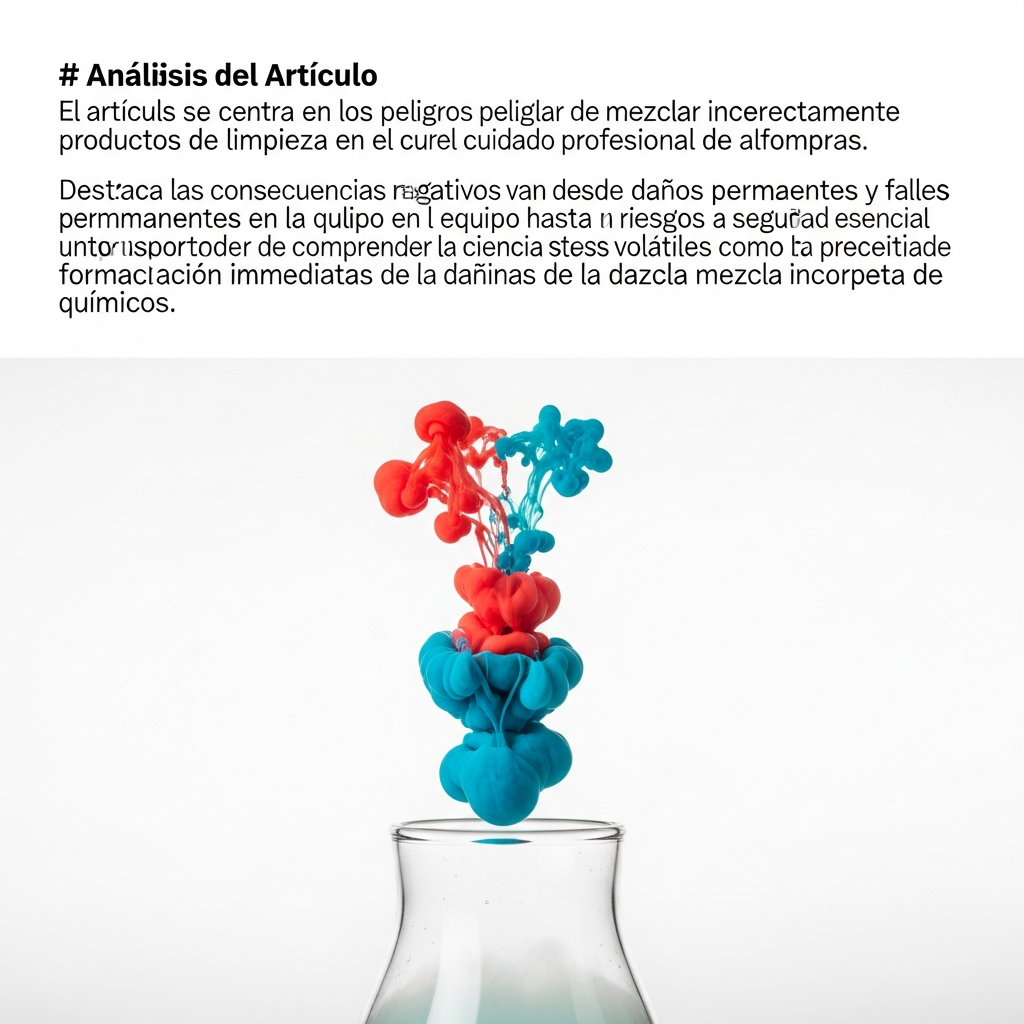
In the world of professional carpet care, a technician’s chemical arsenal is their greatest asset. However, when these powerful agents are misused or combined improperly, they can become a significant liability. The accidental mixing of incompatible cleaning solutions is a pervasive issue that extends beyond mere ineffectiveness; it can lead to permanent carpet damage, equipment failure, and severe health risks for both technicians and clients. Understanding the science behind these volatile reactions is not just best practice—it’s an essential safety protocol for any high-end cleaning operation.
One of the most immediate and damaging consequences of improper chemical mixing is precipitate formation. When a highly alkaline detergent (pH 10+) is not thoroughly rinsed before the application of an acidic rinse agent (pH 3-5), a neutralization reaction can occur within the carpet fibers. This reaction forms an insoluble, waxy residue that binds to fibers, causing a stiff, rough texture and attracting soil at an accelerated rate. Research shows this precipitate can reduce a carpet’s soil resistance by up to 40%, leading to rapid re-soiling and customer dissatisfaction. Furthermore, these solid deposits can clog extractor jets and pumps, leading to costly equipment downtime and repairs.
Beyond physical damage, the gravest risk lies in the creation of toxic gases. A frequent but dangerous error is the mixing of chlorine bleach-based spotters with ammonia-based cleaning solutions. This combination instantly produces chloramine gas, a severe respiratory irritant that can cause chest pain, shortness of breath, and damage to the lungs even at low concentrations. Similarly, mixing bleach with an acidic cleaner generates chlorine gas, a highly toxic substance used as a chemical weapon. Exposure can cause severe irritation to the eyes, throat, and respiratory system, with prolonged exposure leading to permanent lung damage or worse. These reactions underscore the critical need for strict adherence to chemical safety protocols and proper ventilation during all cleaning procedures.
To mitigate these risks, every professional cleaning firm must prioritize comprehensive chemical training. Technicians must understand the pH scale not as a simple number, but as a logarithmic measure of reactivity where each whole number represents a tenfold change in activity. Protocols should mandate flushing the system with fresh water between chemical steps, especially when shifting between high-alkaline and low-acid products. Utilizing single-source chemical lines designed for compatibility can further reduce risk. Ultimately, mastering chemical dynamics is what separates a standard cleaner from an elite textile care specialist, ensuring safety, preserving asset value, and delivering consistently superior results.
No responses yet