


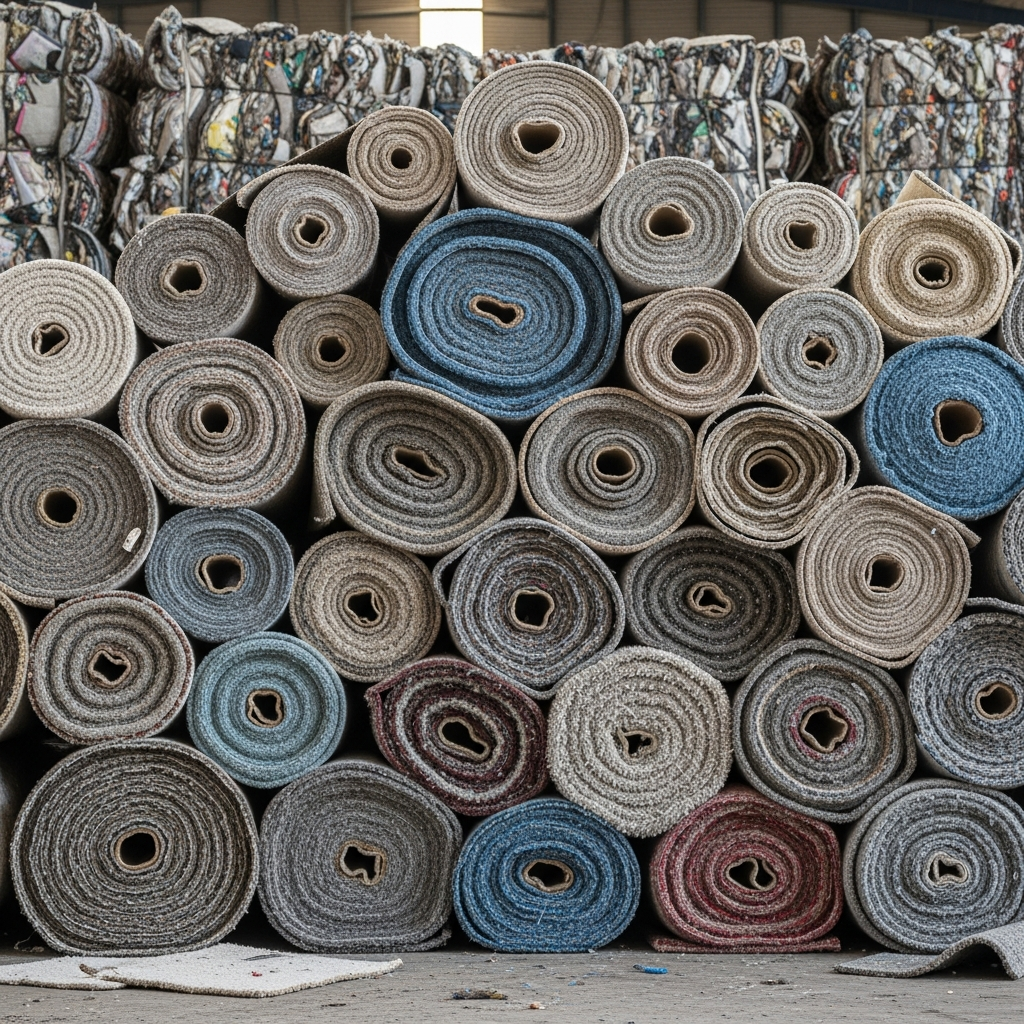
Each year, the United States discards over four billion pounds of carpet, a staggering figure that underscores the textile industry’s significant contribution to landfill volume. For sustainability-focused facility managers and corporate leaders, this presents a critical challenge. While much attention is given to manufacturing and recycling, a pivotal and often overlooked stage in a carpet’s lifecycle is its maintenance. The science of professional cleaning holds a powerful key not just to appearance, but to directly combating premature replacement and drastically reducing textile waste. The core issue lies in the unseen chemistry left behind after cleaning: residues.
Conventional carpet cleaning methods, particularly hot water extraction when performed incorrectly or with inferior chemistry, can leave behind sticky or oily detergent residues. While the carpet may appear clean initially, this microscopic film acts as a powerful dirt magnet. Soil particles from foot traffic bind to the residue, leading to a phenomenon known as rapid re-soiling. According to textile science research, this trapped, abrasive grit acts like sandpaper on the carpet fibers. With every step, the sharp edges of the soil cut and fray the yarn, accelerating wear, dulling the appearance, and ultimately shortening the asset’s functional lifespan. An Institute of Inspection, Cleaning and Restoration Certification (IICRC) study found that professionally maintained carpets can last up to twice as long, directly linking proper care to waste reduction by delaying landfill disposal.
The most significant advancement in sustainable carpet care is the widespread adoption of low-moisture systems, particularly those using encapsulation polymer science. This technology fundamentally redesigns the cleaning process to eliminate soil-attracting residues. Instead of sticky detergents, these systems use crystallizing polymers that surround and encapsulate dirt particles. As the solution dries, it forms a brittle, non-sticky crystal that is easily removed during routine post-cleaning vacuuming. This process prevents the abrasive damage that leads to premature wear. Furthermore, the environmental metrics are compelling: encapsulation cleaning uses up to 90% less water than traditional extraction methods, virtually eliminating the creation of contaminated wastewater and reducing overall resource consumption.
Ultimately, selecting a carpet maintenance protocol is a strategic decision in textile sustainability. By shifting from traditional, high-residue cleaning methods to advanced, polymer-based technologies, organizations can make a measurable impact on waste reduction. This scientific approach directly extends the life of the carpet, preserving the initial investment and significantly delaying its entry into the waste stream. It proves that superior cleaning is not merely an aesthetic choice, but a foundational component of a comprehensive environmental strategy, reducing long-term costs and reinforcing corporate responsibility through intelligent asset preservation.
No responses yet