


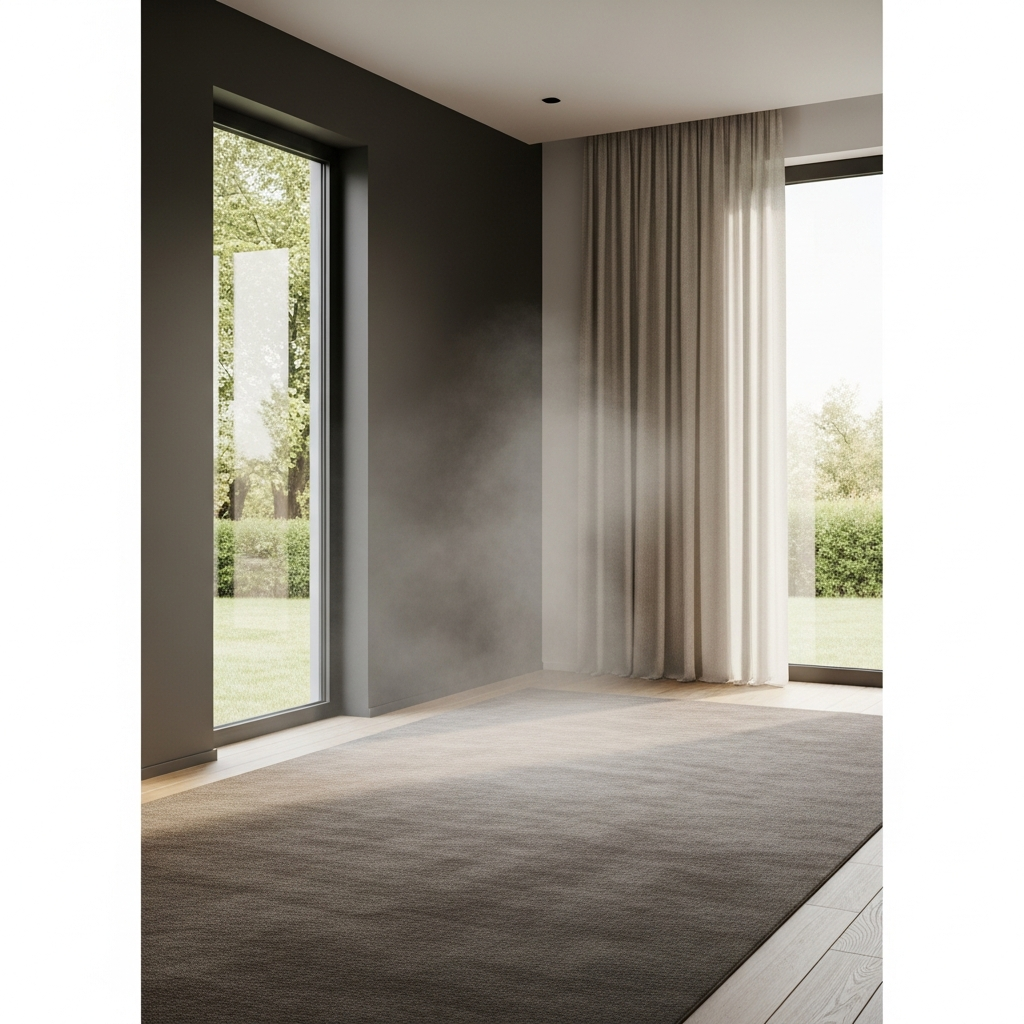
That “new carpet smell” often associated with luxury interiors is more than just a scent; it’s a complex chemical process known as off-gassing. Volatile organic compounds (VOCs), emitted from materials used in manufacturing, are the source. While indoor VOC concentrations are typically two to five times higher than outdoors, according to EPA research, the installation of new furnishings can cause temporary spikes far exceeding that baseline. For facilities managers and high-end property owners, understanding the science behind these emissions is critical for maintaining superior indoor air quality and ensuring occupant respiratory health.
A crucial, often misunderstood, aspect of carpets is their function as a “chemical sink.” Research demonstrates that beyond their own initial off-gassing of compounds like 4-phenylcyclohexene (4-PCH) from latex backings, carpet fibers actively absorb and trap VOCs emitted from other sources, including paints, solvents, and cleaning agents. One study highlighted that porous, high-surface-area materials like carpets have the largest sorption capacity among typical indoor surfaces. This means they can re-emit these trapped compounds over extended periods, sometimes for months or even years, creating a persistent source of low-level indoor air pollution long after the initial odors have dissipated.
While ventilation is the primary strategy during the initial 48-72 hour peak off-gassing period, professional maintenance plays a definitive role in mitigating long-term exposure. An EPA-funded study concluded that professional hot water extraction is highly effective at reducing chemical concentrations within carpet fibers. Data from related studies show that this deep cleaning method can remove a significant percentage of lingering VOCs and other particle-bound contaminants that regular vacuuming cannot. By flushing the pile with controlled heat and extracting the residue under vacuum, the process physically removes the compounds from the environment, rather than merely masking them, directly improving respiratory conditions.
Ultimately, managing VOCs is a proactive, not reactive, process. Specifying low-VOC carpets, certified by programs like the Carpet and Rug Institute’s Green Label Plus, establishes a healthier baseline from day one. However, the long-term strategy must involve a scientifically-backed maintenance schedule. Integrating periodic professional hot water extraction does more than preserve aesthetics; it actively purges the textile of accumulated volatile compounds, safeguarding indoor air quality and protecting the respiratory health of all occupants within the luxury environment.
No responses yet