


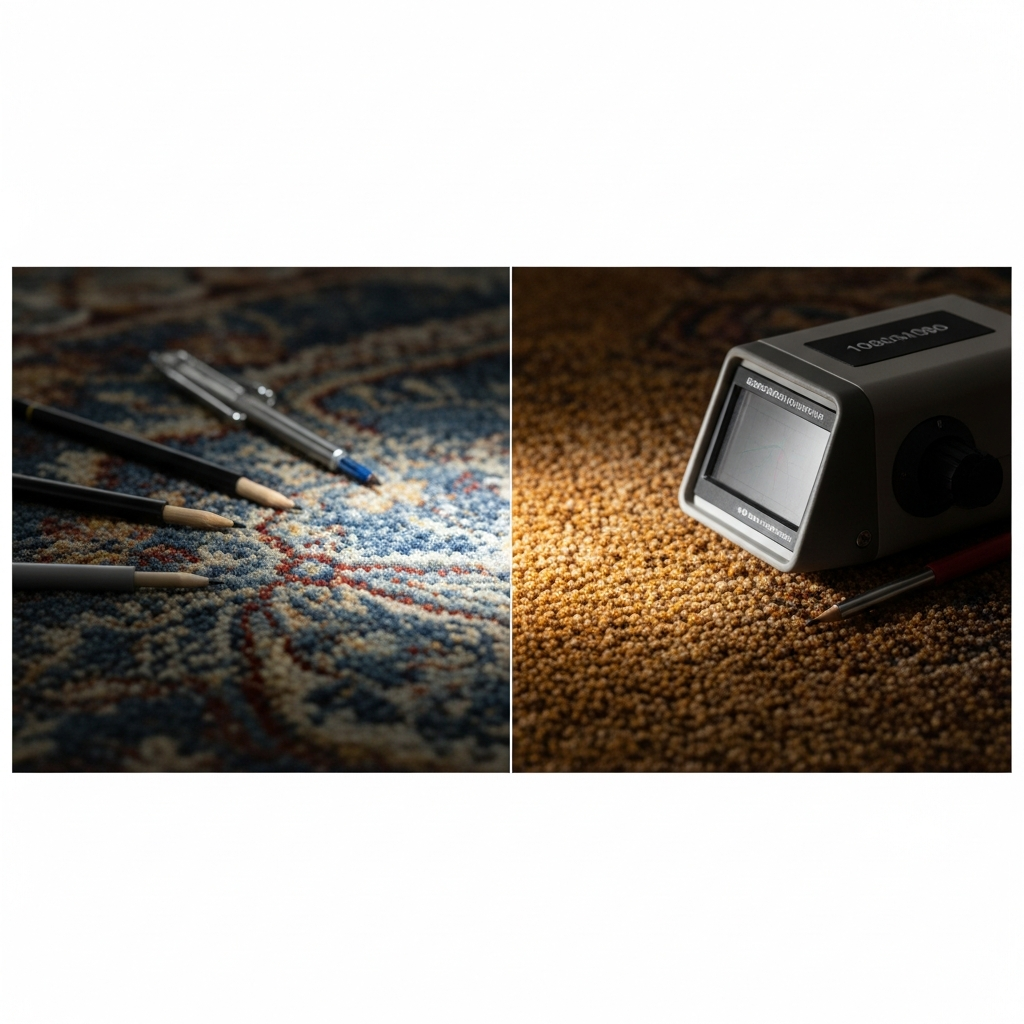
When a luxury carpet suffers from fading or discoloration, restoration is a significant investment. The pivotal question for facility managers and homeowners alike is not just about the immediate aesthetic improvement, but its durability over time. Will the restored color withstand daily operational stressors? The answer lies beyond the skill of the technician and deep within the molecular science of dyeing and industry-standard durability testing. Understanding this science is key to verifying the long-term value of a color restoration project and ensuring the renewed vibrancy is not a fleeting illusion but a lasting asset.
The longevity of post-restoration color is primarily dictated by the chemistry of the dye process itself. Professional restoration exclusively targets carpets with protein-based or nylon fibers (like wool, silk, and Nylon 6,6) because their molecular structure contains dye sites. High-quality, pre-metalized acid dyes are used to form powerful ionic bonds with these sites, effectively becoming an integral part of the fiber. This bond is far superior to topical paints or pigments that merely coat the surface. Studies comparing fiber types show that Nylon 6,6, with its tighter, more crystalline structure, offers superior resilience and color retention against heat and abrasion compared to standard Nylon 6. This chemical integration is the foundational reason professionally restored colors do not simply wash or wear away, maintaining their integrity for the remaining service life of the carpet.
Beyond the chemical bond, the durability of restored color is quantified by rigorous industry testing protocols established by the American Association of Textile Chemists and Colorists (AATCC). For instance, AATCC Test Method 16 exposes samples to intense xenon-arc light, simulating prolonged sun exposure. High-end restoration results often achieve a rating of Grade 4 or 5 on the Gray Scale, indicating no more than a slight fading after 40 accelerated fading units (AFU). Similarly, AATCC Test Method 8, the Crockmeter test, measures color transfer from rubbing. A restored carpet should achieve a dry crocking rating of at least Grade 4, proving the color is locked into the fiber and will not transfer to other surfaces under normal foot traffic. These metrics provide tangible proof of a restoration’s resilience against the primary causes of color degradation.
In conclusion, the endurance of a carpet color restoration is not a matter of chance, but a result of precise chemical engineering and verifiable performance standards. The creation of strong ionic bonds between acid dyes and receptive carpet fibers ensures the color is chemically anchored, not just superficially applied. This permanence is then validated against internationally recognized AATCC metrics for light and abrasion fastness. To safeguard your investment, we advise clients to inquire specifically about the types of dyes used and the expected colorfastness ratings. A professional service committed to this scientific approach delivers not just a visual transformation, but a durable, long-lasting solution that protects the asset value of your fine carpeting.
No responses yet