

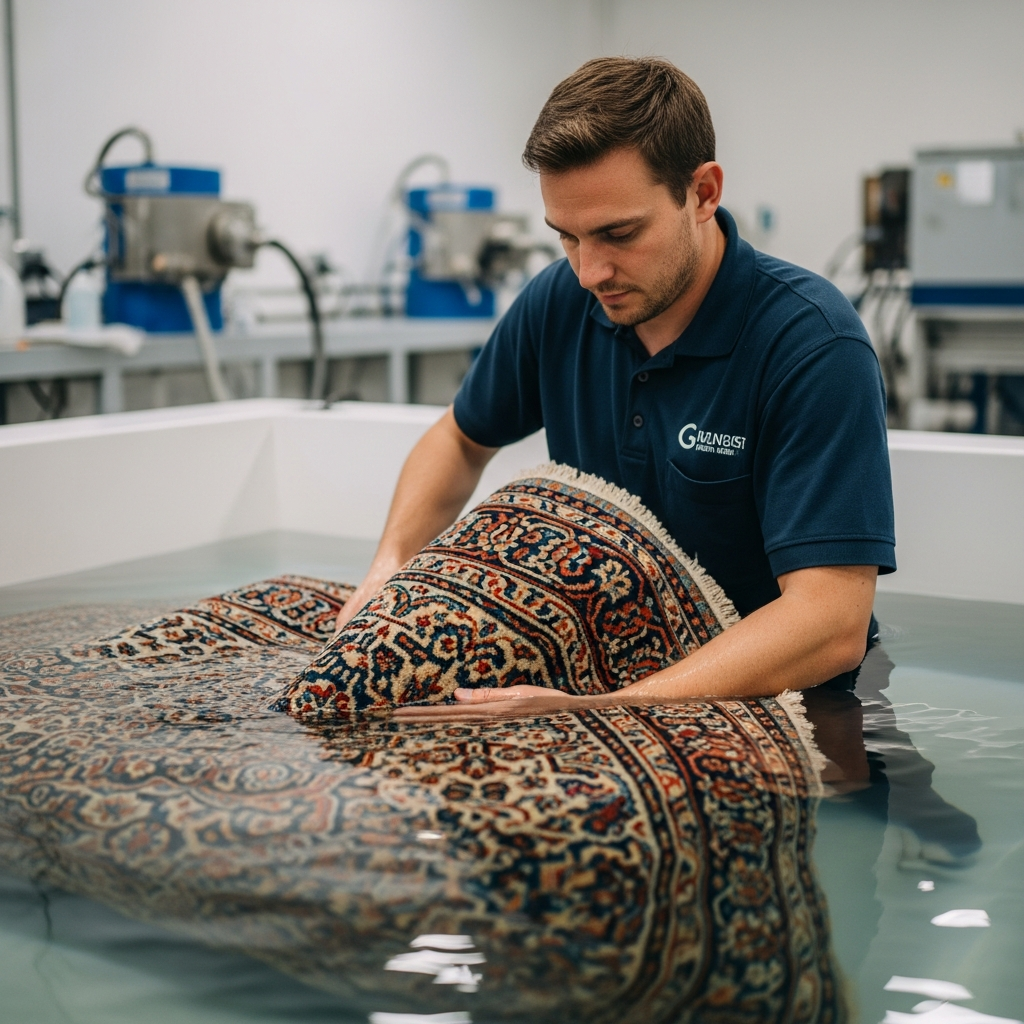
Full submersion washing is the gold standard for cleaning heritage textiles, yet its success hinges on a deep understanding of fiber chemistry, not merely technique. For investment-grade wool, silk, and cotton rugs, improper protocols can lead to irreversible damage, from dye migration to fiber degradation. The critical difference between a restorative clean and a catastrophic outcome lies in the precise control of water chemistry, drying dynamics, and the molecular behavior of the textile itself. This is conservation science in practice, where every step is dictated by research-backed data to preserve the artistic and structural integrity of the piece.
One of the most prevalent risks in submersion washing is cellulose browning, particularly on cotton fringes. This discoloration is not dirt, but a chemical reaction involving lignin, a natural polymer within plant-based fibers like cotton and jute. When cleaning solutions with a high alkaline pH (often above 9.0) are used, they break down lignin, making it water-soluble. During slow, uncontrolled drying, capillary action wicks this dissolved lignin and moisture to the fiber tips. As the water evaporates, the oxidized lignin is left behind, creating the characteristic brown or yellow staining. Research shows that accelerating drying time with controlled air movers and maintaining a slightly acidic or neutral pH cleaning solution are the most effective strategies to prevent this chemical browning, mitigating a risk that can permanently mar a valuable textile.
Equally critical is the complete removal of cleaning agents. Many detergents leave behind a sticky, microscopic residue, fundamentally altering the textile’s hygroscopic properties and surface tension. This residue acts as a dirt magnet, accelerating re-soiling and creating a dull, stiff texture. Scientific analysis of improperly rinsed fibers reveals that residual surfactants can reduce a wool fiber’s natural soil resistance by over 50%. The conservation-grade protocol demands multiple, clear-water rinse cycles and the use of specialized rinsing agents that neutralize pH and ensure no surfactants remain. The goal is to return the textile to its natural state, free of any foreign chemistry that could compromise its longevity and aesthetic.
Ultimately, professional submersion washing is a calculated, scientific discipline. Success requires more than just a wash floor; it demands stringent protocols based on fiber identification, dye stability testing, and precise chemical formulation. By controlling pH to remain within the safe 5.5-8.5 range for natural protein fibers, ensuring 100% detergent residue removal through exhaustive rinsing, and managing drying with deliberate speed, we protect these textiles at a molecular level. For owners of heritage rugs, entrusting their care to facilities that operate on these scientific principles is the only way to guarantee both cleanliness and true conservation.
No responses yet