


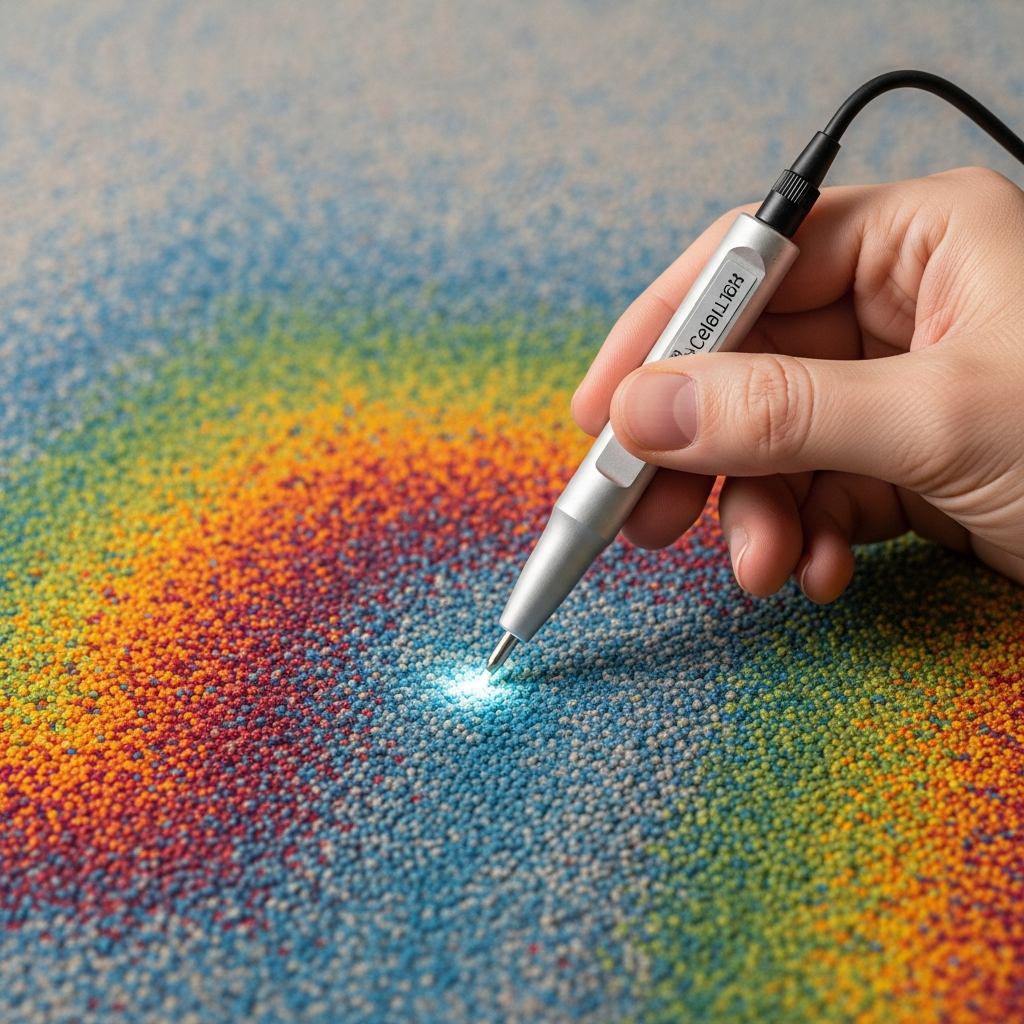
A luxury rug with bleeding colors is more than an eyesore; it’s a complex chemical problem that compromises a significant asset. Fugitive dyes—colors that migrate or ‘bleed’ during cleaning—can turn a precisely patterned heirloom into a muddled mess. For facilities managers and high-end homeowners, this issue represents a critical failure in textile maintenance. However, advanced fiber forensics now provide a sophisticated arsenal for dye bleed correction, grounded in the principles of chemistry to reverse unwanted color transfer and restore chromatic integrity with remarkable precision.
The science of dye bleed correction hinges on understanding the molecular bonds between dyes and fibers, particularly in materials like wool and nylon. Most carpet dyes are anionic (negatively charged) acid dyes, which form ionic bonds with cationic (positively charged) dye sites within the fiber. Dye migration often occurs when cleaning with high-alkalinity solutions (pH above 9.0), which disrupts this bond and allows dye molecules to float freely. The primary corrective strategy involves two main chemical processes: reductive stripping and oxidative bleaching. Reductive agents, like sodium hydrosulfite, work by removing oxygen atoms from the fugitive dye’s molecular structure, rendering it colorless without damaging the underlying fiber. Research shows this method is particularly effective for artificial food colorings and can be precisely controlled with heat, often between 160°F and 170°F, to accelerate the reaction. Oxidative agents, such as hydrogen peroxide, add oxygen to break down organic stains and can also neutralize unwanted dyes, though they must be used with caution on natural fibers.
Beyond stripping fugitive colors, stabilizing the original dyes is paramount. A key technology in this arena is the application of cationic dye fixatives and acid dye blockers. After correcting a bleed, the carpet’s pH must be returned to a slightly acidic state (typically pH 4.5-5.5 for wool) to re-establish a positive charge on the fiber’s dye sites. Cationic fixatives are positively charged polymers that act as a molecular lock, bonding with the anionic dye and holding it securely within the fiber, improving wet fastness significantly. Furthermore, applying an acid dye blocker, a colorless anionic polymer, fills any vacant dye sites. This preventative treatment acts as a shield, preventing foreign dyes from future spills from bonding with the fiber, effectively boosting stain resistance by over 75% in many modern nylon carpets.
Ultimately, successful dye bleed correction is not a matter of aggressive scrubbing but of meticulous chemical intervention. The process requires a deep understanding of fiber types, dye chemistry, and the precise application of pH-controlled solutions and specialized agents. For stakeholders managing luxury interiors, partnering with IICRC-certified professionals who utilize these advanced techniques is non-negotiable. This ensures that color repair is not just a cleaning task, but a scientific restoration that protects the carpet’s aesthetic appeal, structural integrity, and long-term value against the complex challenge of fugitive dyes.
No responses yet