


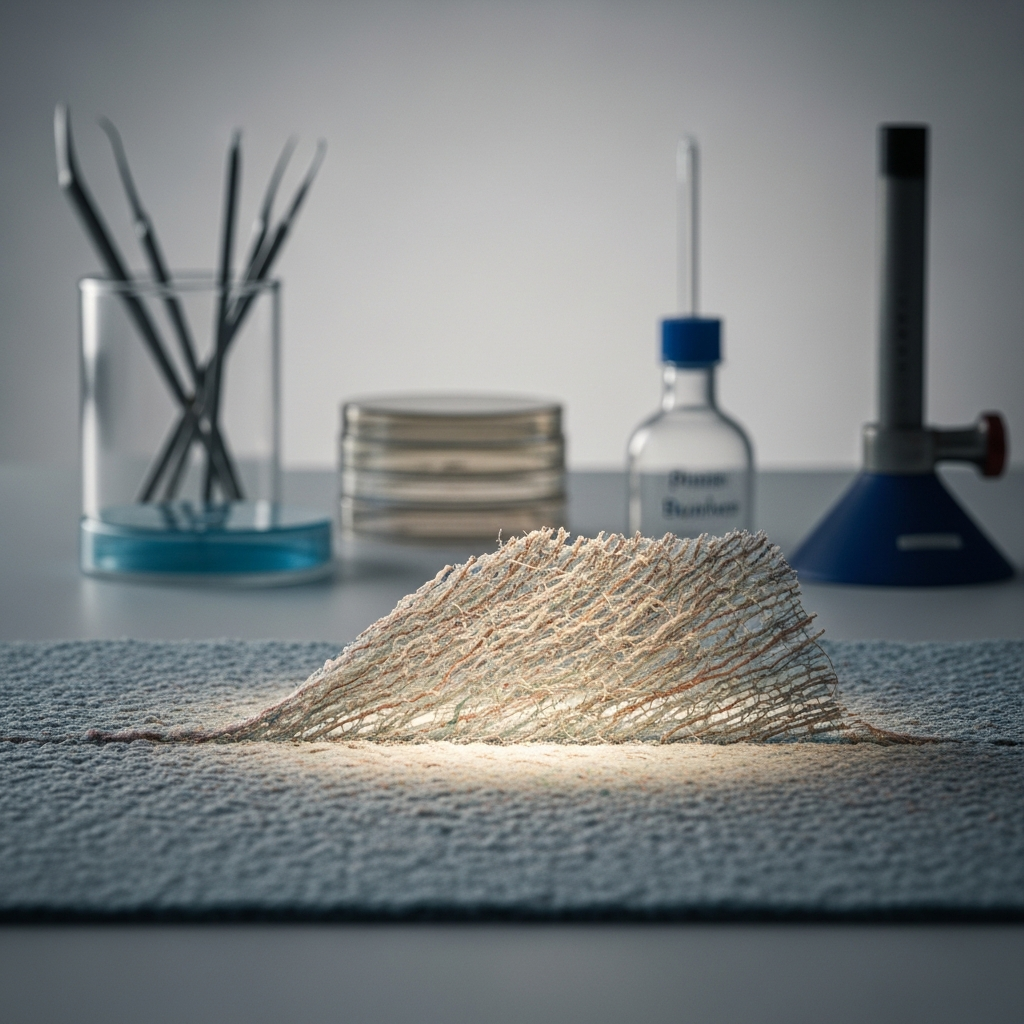
In the luxury and commercial carpet cleaning sector, misidentifying a fiber is not just a technical error; it’s a costly liability. Applying an alkaline solution to a delicate wool-silk blend or using the wrong solvent on a high-grade nylon can lead to irreversible damage, jeopardizing client relationships and a firm’s reputation. While many technicians rely on the classic burn test, modern textiles, with their complex blends and chemical treatments, demand a more sophisticated, multi-faceted approach. Advanced fiber identification is no longer a niche skill but a fundamental component of risk management and service excellence in high-stakes environments.
The burn test, while foundational, is a study in pyrolysis—the thermal decomposition of materials. Its accuracy hinges on precise observation. For example, a natural wool fiber, being protein-based, is self-extinguishing and produces a soft, irregular black ash that crumbles easily, accompanied by the distinct odor of burning hair. In contrast, Nylon 6,6, a synthetic polyamide, melts and shrinks from the flame, forming a hard, round grey or brown bead as residue and emitting a smell often compared to celery or sealing wax. Polyester sputters, producing sooty black smoke, a sweet chemical odor, and a hard, shiny black bead. Distinctions can be subtle; olefin also forms a hard bead but smells of asphalt. For technicians, documenting these specific results—flame color, melt/burn behavior, odor, and ash characteristics—provides a critical preliminary data set, guiding subsequent, more definitive tests and preventing catastrophic cleaning errors.
For absolute certainty, particularly with valuable or unfamiliar textiles, chemical solubility tests offer definitive, binary outcomes. These tests exploit the unique molecular structures of different polymers, which dictate their resistance to specific solvents. A notable example is the formic acid test for nylon. When a sample fiber is immersed in an 85% formic acid solution at room temperature, nylon will dissolve completely within minutes, a reaction not seen in polyester or olefin. Similarly, a 5% sodium hypochlorite solution (bleach) provides a definitive test for wool. This protein fiber will completely dissolve in the solution over approximately 10-20 minutes, while synthetic fibers remain intact. This chemical specificity is invaluable when a burn test is inconclusive, such as with certain treated blends that mimic the burn characteristics of other fibers. Employing these chemical tests provides irrefutable evidence of a fiber’s identity, forming the scientific backbone of any modern cleaning protocol.
Ultimately, professional carpet care requires moving beyond simple observation to empirical validation. Relying solely on a burn test in today’s market is like navigating without a map; it’s fraught with unnecessary risk. By integrating systematic burn analysis with precise chemical identification, cleaning specialists can operate with near-100% certainty. This dual-method approach not only prevents costly mistakes but also elevates the service standard, demonstrating a commitment to scientific precision and asset preservation. For firms catering to a discerning clientele, mastering fiber identification is a direct investment in quality assurance and long-term business integrity.
No responses yet