


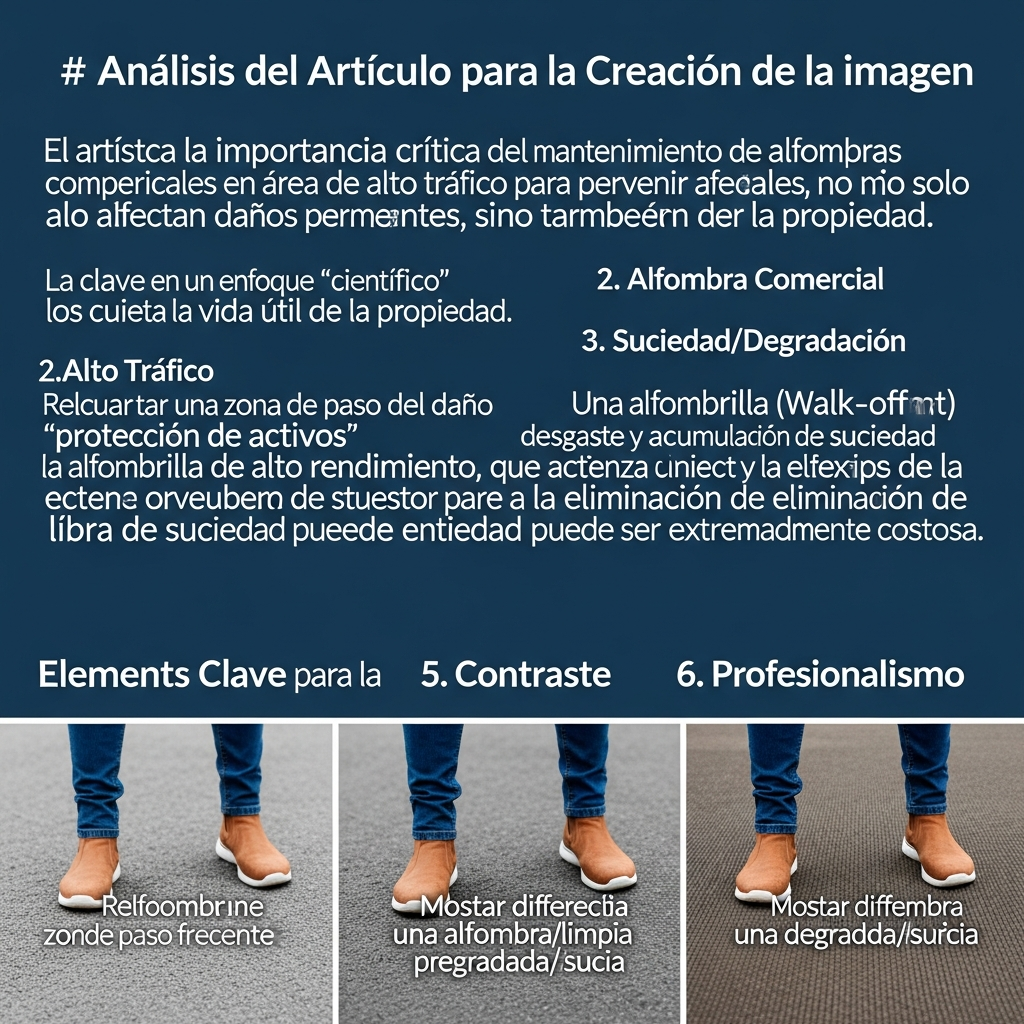
High-traffic lanes are the epicenters of commercial carpet degradation, where accumulated soil acts as an abrasive, permanently damaging fibers and diminishing a property’s prestige. The science is clear: according to industry research, an astonishing 70-80% of all dirt, dust, and grime within a building is tracked in from the outside. The International Sanitary Supply Association (ISSA) estimates the cost of removing a single pound of this dirt can exceed $600. This makes traffic lane maintenance less about simple cleaning and more about strategic asset protection, demanding a scientific approach that begins before a technician ever starts a machine.
The first and most critical component in any advanced maintenance program is a high-performance walk-off mat system. This is not a decorative choice but a vital engineering control. Research demonstrates that 15 feet of effective matting can trap as much as 75% of soil and moisture at the entrance; extending this to 30 feet can capture nearly 100%. By stopping dirt at the door, these systems drastically reduce the load of abrasive particulate matter ground into traffic lanes. Facilities that implement standardized, multi-zone matting programs report reductions in interior maintenance labor and costs by as much as 24% annually, directly protecting the carpet investment and improving indoor air quality by capturing contaminants at the source.
Once soil bypasses the entrance, it quickly becomes compacted deep within the carpet pile. Daily vacuuming removes loose debris, but the true challenge lies in addressing the embedded, oily soils that cause discoloration and fiber crushing. This is where mechanical pile-lifting becomes indispensable. Often overlooked, this preparatory step uses a specialized machine with counter-rotating brushes to break apart impacted soil and lift crushed fibers before extraction. This process is crucial for commercial-grade loop pile carpets, especially those made from polypropylene, which are prone to permanent crushing. By agitating and decompressing the pile, this process allows cleaning solutions and subsequent extraction to penetrate fully, increasing soil removal effectiveness and restoring the carpet’s texture and resilience.
For interim appearance management between deep cleanings, methods like bonnet-cleaning offer a rapid, low-moisture solution. A rotary machine with an absorbent pad, or bonnet, spins across the surface, absorbing soil from the upper third of the carpet fibers. While effective for a quick visual improvement with drying times often under an hour, it must be understood as a surface-level cosmetic treatment. Over-reliance on bonneting can push abrasive soils deeper into the carpet base and potentially distort delicate fiber bundles. Therefore, an effective program integrates bonnet cleaning for temporary appearance boosts while scheduling periodic hot water extraction, which can remove up to 97% of embedded soils, to ensure the long-term health and lifespan of the carpet asset.
No responses yet