


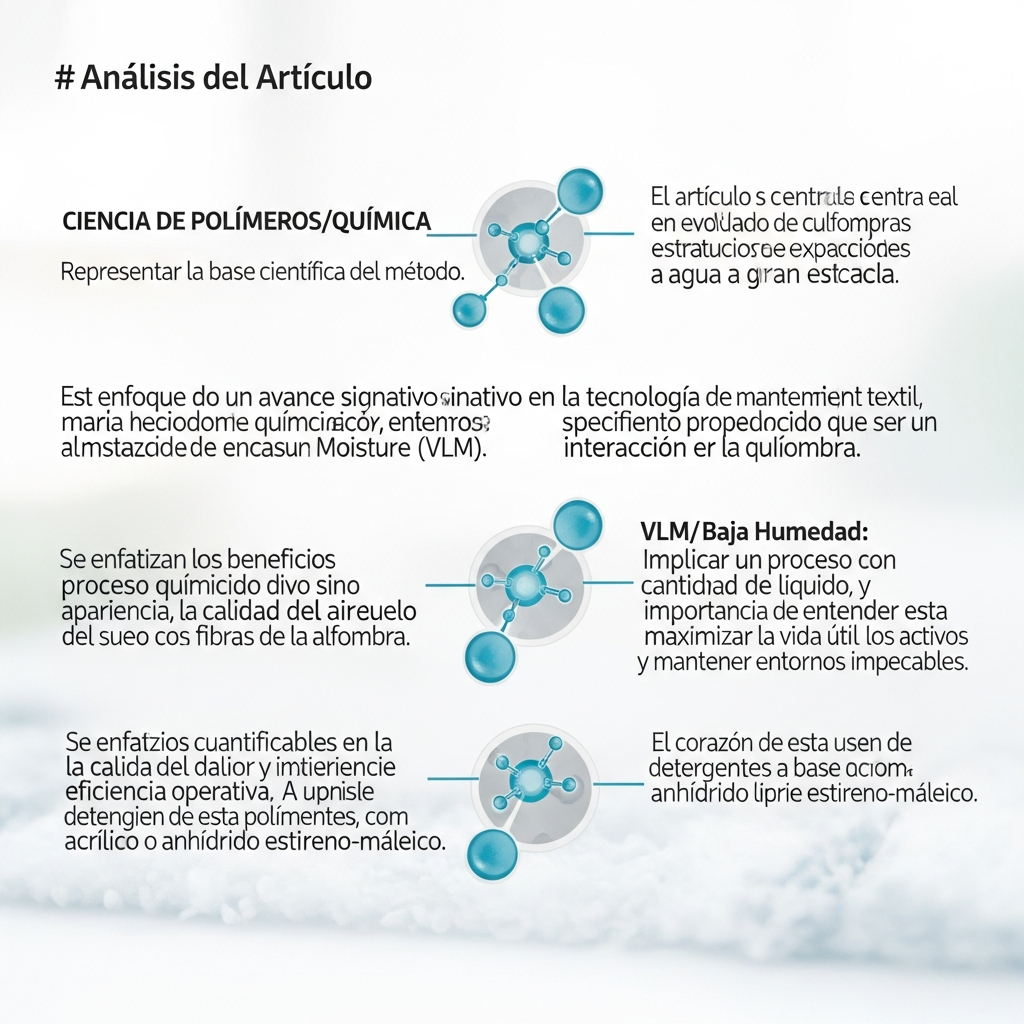
In commercial carpet care, the discourse is shifting from brute-force water extraction to the nuanced science of polymer chemistry. Very Low Moisture (VLM) cleaning, specifically the encapsulation method, represents a significant leap in textile maintenance technology. This approach is not merely about using less water; it’s a targeted chemical process that alters how soil interacts with carpet fibers, offering quantifiable improvements in appearance, indoor air quality, and operational efficiency. For facility managers and luxury property owners, understanding this chemistry is key to maximizing asset longevity and maintaining pristine environments.
The core of encapsulation technology lies in its unique polymer-based detergents, most commonly featuring acrylic or styrene-maleic anhydride copolymers. When agitated into the carpet, these specialized polymers surround and isolate soils, particularly the sticky, oily residues that bind dry particulate matter to the fibers. As the solution dries—typically in 30 to 90 minutes—the polymer transitions from a liquid to a distinct, brittle crystalline structure. This process, known as crystallization, effectively traps the soil within a non-sticky crystal that does not bond with the carpet fiber. Subsequent vacuuming easily fractures and removes these crystals, achieving soil removal rates of over 50% in an interim maintenance cleaning, a stark contrast to bonnet cleaning methods that often remove less than 5% and can push soil deeper into the pile.
The advanced chemistry of modern encapsulation products provides a crucial secondary benefit: significant resistance to resoiling. Traditional detergents can leave behind a tacky residue that acts as a magnet for new soil, accelerating the decline in a carpet’s appearance. VLM polymers, however, dry to a hard, non-tacky crystal. Any microscopic polymer residue that remains post-vacuuming actually functions as a soil-release agent. This crystalline film has a lower surface energy than the fiber itself, preventing new soils from forming a strong bond. This chemical barrier is a primary reason why facilities using encapsulation can often extend the time between restorative deep cleanings, reducing overall maintenance costs and disruption.
Ultimately, the adoption of VLM polymer chemistry is an evidence-based decision for high-traffic commercial environments. By leveraging the principles of encapsulation and crystallization, this method reduces carpet drying times from 6-24 hours with hot water extraction to under two hours. This dramatic reduction in moisture virtually eliminates the risk of microbial growth and recurring spill stains caused by wicking. For stakeholders focused on both aesthetic excellence and operational metrics, VLM cleaning is more than a maintenance procedure; it’s an applied textile finish that actively preserves the value and appearance of premium carpet assets.
No responses yet