


Beneath the plush fibers and intricate designs of luxury carpets lies an unseen and often-underestimated foundation: the backing system. Comprised of primary and secondary backings fused by latex binders, this structure dictates a carpet’s dimensional stability and longevity. When this system fails, the consequences—delamination, buckling, and premature wear—are catastrophic for high-value installations. For facility managers and cleaning professionals, understanding the science behind this degradation is not just academic; it is crucial for asset protection and maintaining interior excellence. The integrity of the entire carpet system hinges on the chemical stability of these hidden components.
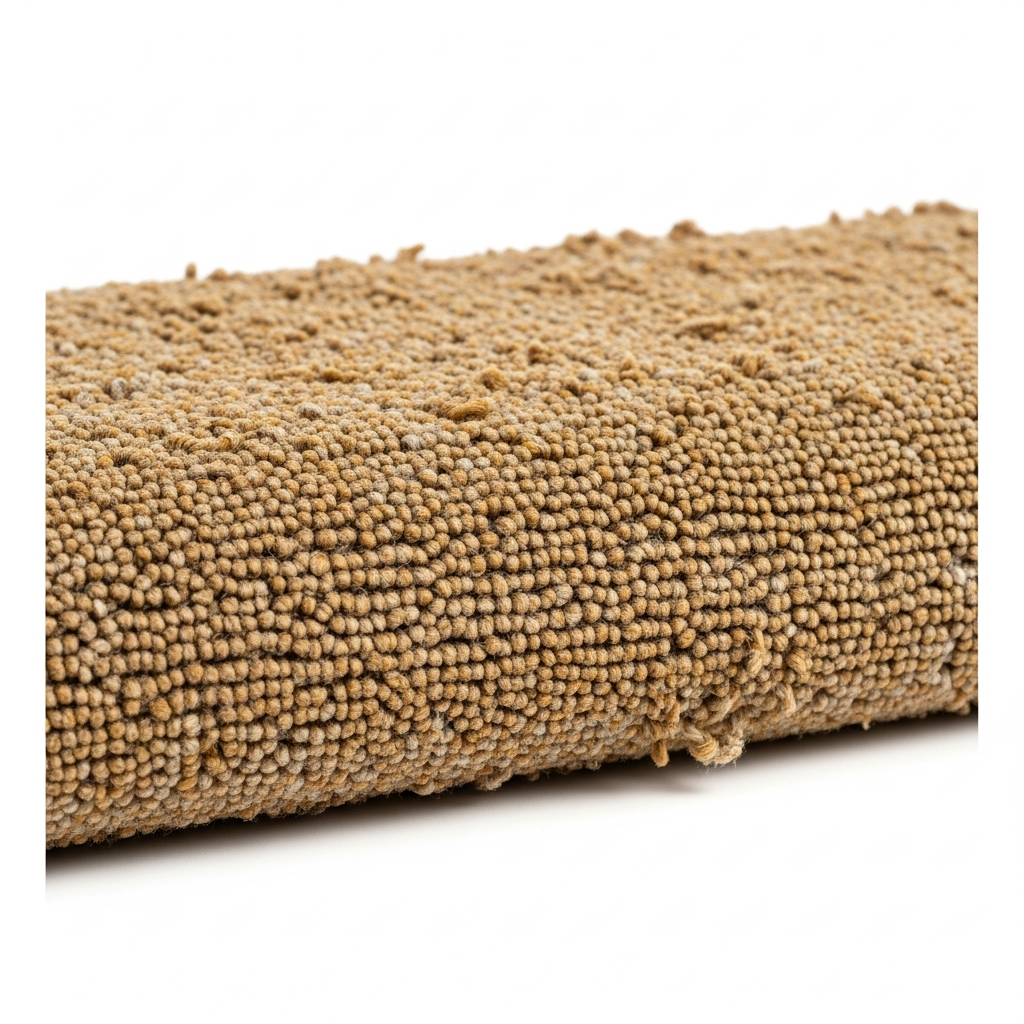
The primary culprit in backing failure is the breakdown of the latex binder, most commonly a styrene-butadiene rubber (SBR) compound. This degradation is often a process of hydrolysis, where prolonged exposure to moisture chemically severs the polymer chains in the adhesive. Research shows that high humidity or improper cleaning techniques that leave residual moisture can accelerate this process significantly. In controlled studies, SBR binders exposed to sustained relative humidity above 75% showed a measurable loss in cohesive strength in as little as 90 days. This chemical breakdown manifests physically as a fine powder, a common sign of a deteriorating backing. Furthermore, aggressive cleaning agents with high or low pH levels can be just as damaging, chemically altering the latex and weakening the bond between the primary and secondary backings, leading to delamination.
Beyond moisture and chemicals, environmental factors play a significant role. Ultraviolet (UV) radiation from direct sunlight, for instance, is a powerful catalyst for photodegradation. Scientific analysis reveals that UV exposure can break down the polymer bonds in both the latex adhesive and the polypropylene backing materials. This process not only causes the backing to become brittle and crumble but can also accelerate color fading in the carpet fibers themselves. Similarly, ozone, a common indoor air pollutant, actively attacks the double bonds in the butadiene component of SBR latex, reducing its elasticity. Studies have quantified this effect, showing that even at low atmospheric concentrations, ozone can reduce the tensile strength of latex binders by up to 20% over a five-year period in a commercial setting, leading to ripples and buckling that cannot be corrected by re-stretching.
To mitigate backing degradation, a proactive, science-informed approach to carpet maintenance is essential. This begins with controlling environmental conditions, particularly humidity, and protecting carpets from prolonged, direct UV exposure. Critically, professional cleaning protocols must be strictly followed, emphasizing the use of pH-neutral cleaning solutions and, most importantly, ensuring rapid and complete drying. Utilizing high-velocity air movers and verifying dryness with a moisture meter can prevent the hydrolytic damage that dooms latex binders. By focusing on the preservation of the unseen backing structure, professionals can extend the functional life of a carpet by years, protecting the investment and ensuring its appearance remains at the highest standard.
No responses yet