

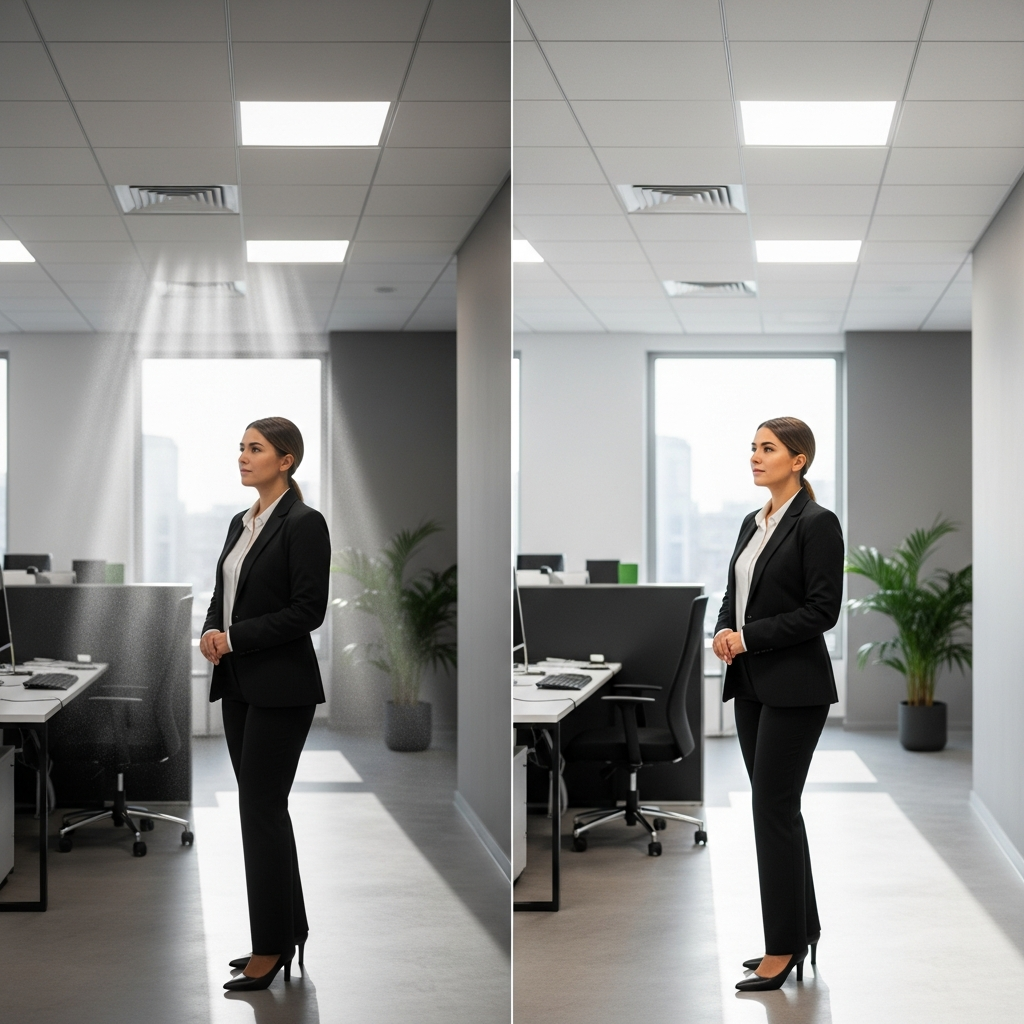
In luxury and corporate environments, indoor air quality (IAQ) is not just a matter of comfort but a critical component of occupant health and productivity. While hard surfaces are often perceived as a cleaner alternative, scientific studies reveal a more complex reality. Carpets function as vast, passive air filters, trapping airborne pollutants. The pivotal question is not whether carpets harbor contaminants, but how professional cleaning protocols can demonstrably purify the air we breathe. Rigorous before-and-after studies provide compelling, data-driven answers.
One of the most significant metrics in IAQ is the reduction of biological allergens. Independent research conducted by organizations like Airmid Healthgroup provides definitive evidence. A study analyzing the efficacy of professional hot water extraction on residential carpets documented a drastic reduction in common allergens after a single cleaning session. The findings showed a 91% decrease in surface-level dust mite allergens, a 95% reduction in cat dander, and a staggering 97% removal of dog dander. The same study noted a corresponding and significant drop in airborne particulate counts post-cleaning, proving that removing pollutants from carpet fibers directly prevents their recirculation into the breathing zone.
Beyond allergens, the impact on volatile organic compounds (VOCs) and other microscopic particulates is a key performance indicator. Carpets can act as sinks, absorbing VOCs from new furnishings, paints, and adhesives. While this temporarily lowers airborne concentrations, these compounds can be re-emitted over time. Research cited by the EPA has found that professional hot water extraction is a highly effective method for accelerating the removal of these chemicals. In controlled environments, repeated cleanings have been shown to reduce certain chemical levels by up to 90%. This extraction process physically removes the contaminants from the indoor ecosystem, rather than simply masking them or waiting for them to dissipate naturally.
The evidence is clear: a professionally executed carpet maintenance program is a direct investment in respiratory health. The quantifiable reduction of allergens and accelerated removal of VOCs translate to a healthier indoor environment. By moving beyond simple aesthetics and implementing a data-backed cleaning strategy, facility managers and homeowners can leverage their carpets as an active air purification system. Scheduling regular deep cleanings based on usage, ideally every 12 to 18 months as recommended by the Carpet and Rug Institute, is a proactive measure to ensure optimal and continuously improving indoor air quality.
No responses yet