


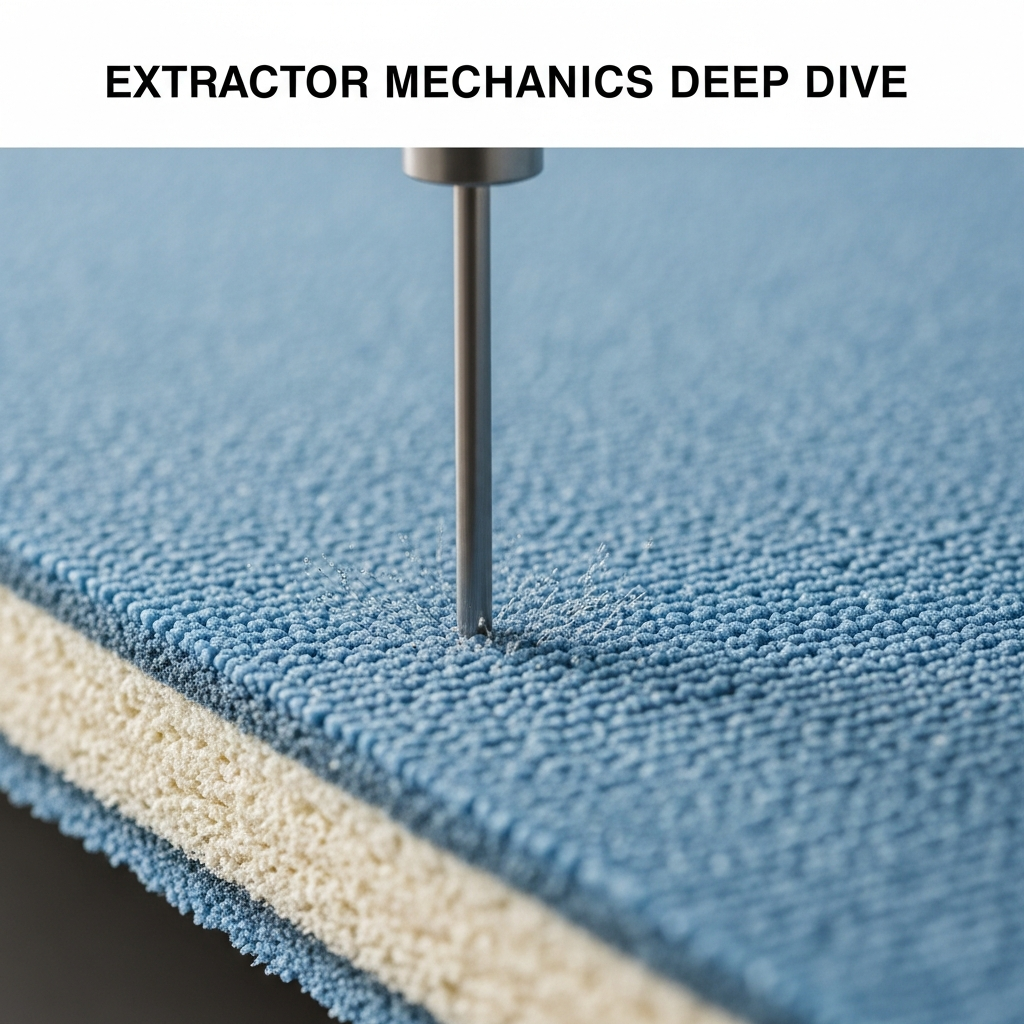
In the luxury and corporate maintenance sectors, the difference between a visually acceptable clean and a scientifically validated one is immense. Sub-optimal carpet extraction doesn’t just leave behind soil; it leaves capital on the table through premature asset replacement and diminished indoor air quality. The mechanics of your extractor are not just about power, but precision. The interplay between pump pressure, vacuum motor physics, and fiber type, particularly premium Nylon 6,6, dictates the true efficacy of your deep cleaning protocol and the longevity of the carpet itself.
A critical, yet often miscalibrated, variable is pump pressure (PSI). While higher pressure seems intuitively better, research into fiber mechanics reveals a more nuanced reality. For high-density, tightly twisted fibers like commercial-grade Nylon 6,6, precise pressure is paramount. Its dense molecular structure resists crushing and wear but can be compromised by excessive force. Operating an extractor in the 300-400 PSI range provides the optimal force to flush deep-set particulates from the lower third of the pile without over-wetting the backing or distorting the fiber’s memory. Pressures exceeding 500 PSI on this specific fiber type can lead to pile bloom and reduce the carpet’s lifespan, whereas pressures below 200 PSI often fail to dislodge abrasive, embedded soils, leading to accelerated wear from foot traffic.
Equally vital is the extractor’s vacuum motor technology, a balance of ‘water lift’ and cubic feet per minute (CFM). Water lift measures the raw suction power to pull water and suspended soil vertically out of the carpet. High-performance extractors feature dual 3-stage vacuum motors capable of generating over 150 inches of water lift. This specification is crucial for moisture recovery, directly impacting drying times and preventing the growth of microbes. A system with high CFM but low water lift moves a lot of air but lacks the strength to pull dense, moisture-laden soil from deep within the carpet pile. Professional-grade equipment achieves up to 95% moisture extraction, a stark contrast to the 50-75% common in lower-tier machines, ensuring carpets are dry in hours, not days.
Ultimately, superior carpet maintenance is an applied science. The mechanical specifications of your extractor must be intelligently matched to the materials you are treating. For assets like Nylon 6,6 carpeting, this means deploying equipment with adjustable pressure capabilities to target a 300-400 PSI sweet spot and a vacuum system engineered for high water lift, not just airflow. By aligning equipment mechanics with material science, facility managers can extend carpet life, enhance interior hygiene, and deliver a demonstrably superior standard of clean that protects both the asset and the health of the building’s occupants.
No responses yet